Footwear
Goodyear Welt vs Cemented Soles: The Construction Detail That Decides Shoe Lifespan
How Goodyear welt and cemented construction differ, why stitching decides resoleability and water resistance, and how to tell them apart in a shop.
Clothing, shoes & accessories, honestly reviewed
Footwear
How Goodyear welt and cemented construction differ, why stitching decides resoleability and water resistance, and how to tell them apart in a shop.
By Priya Nair · Footwear Editor
Last updated September 19, 2026
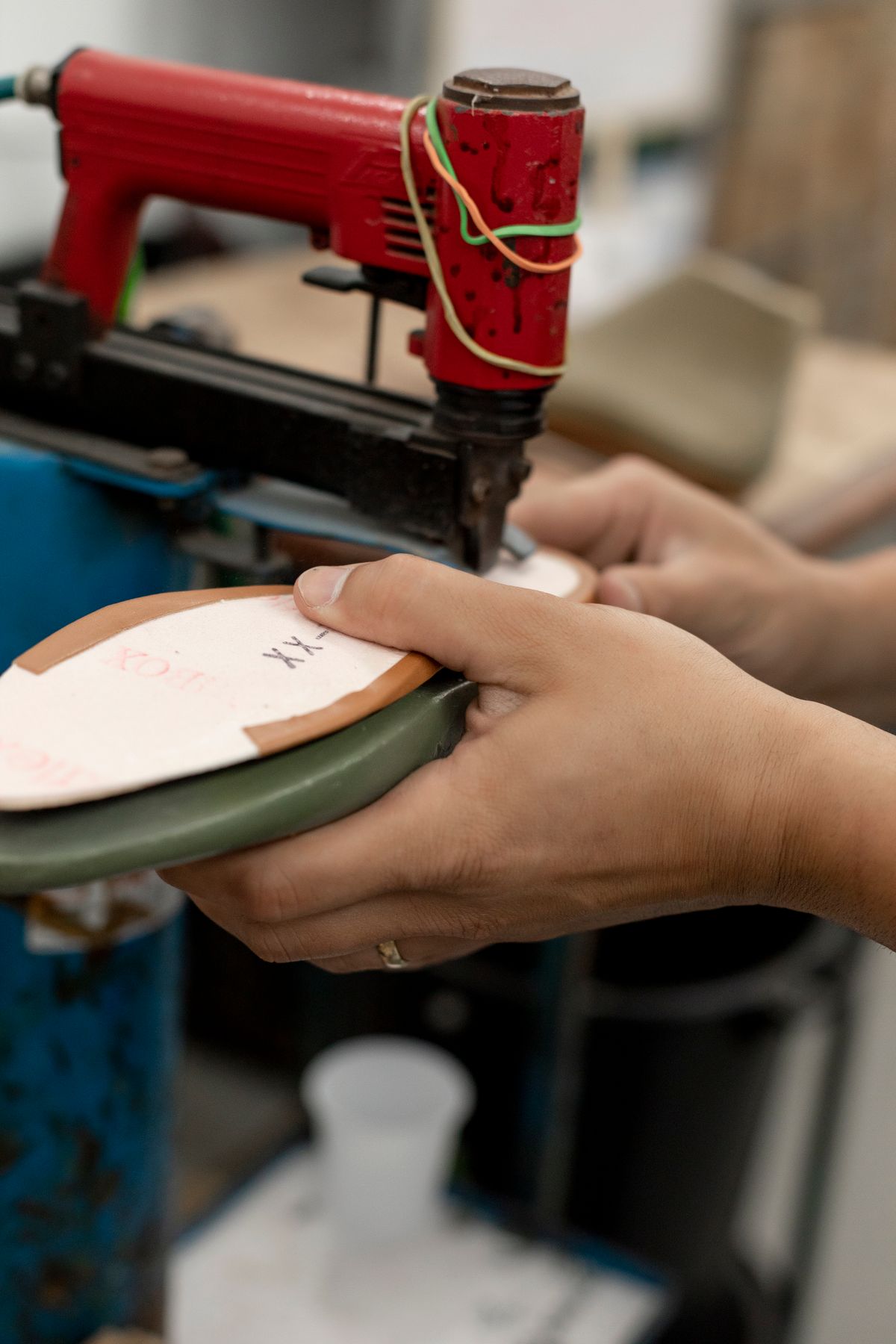
A shoe dies at the sole, not the upper — and whether that death is final depends on one decision made at the factory: whether the sole was stitched or glued. Goodyear welt construction allows a cobbler to replace the sole again and again, which is why well-maintained welted pairs are routinely credited with 15 to 25 years of service. Cemented shoes, where adhesive does all the work, are generally wear-until-worn-out items with a typical lifespan of 3 to 5 years. Here is what separates the two, and how to tell them apart in ten seconds.
The Goodyear welt acts as a middleman between the upper and the sole. A narrow strip of leather — the welt — is stitched to the upper and to a canvas rib (called gemming) that is glued to the insole. The outsole is then stitched to that welt in a second, visible row of stitching. The cavity between insole and outsole is usually filled with cork, which compresses and molds to the wearer’s foot over time.
The practical consequences come from that layered structure. Because the sole is attached to the welt rather than to the upper itself, a cobbler can unpick the outer stitch and attach a fresh sole without touching the upper at all. And because the welt channel is stitched and sealed rather than relying on a glue line, welted shoes resist water noticeably better — the comparison published by the footwear-industry guide ProductDif rates welted construction high on water resistance and cemented construction low to moderate, since adhesive bonds degrade with moisture.
Cemented shoes — the dominant method in modern footwear — bond the outsole directly to the upper with adhesive. There is no welt and usually no stitching at the sole edge. The method exists for good reasons: it is faster and cheaper to manufacture, the shoe is lighter, and it is more flexible from the first wear because there is no welt rib or cork filling to soften.
The trade-off is structural. A glue line is a single point of failure; once it separates, reattaching a worn sole without damaging the upper is rarely practical. Squirrel Hill Shoe Repair puts it plainly in its construction guide: cemented shoes can sometimes be repaired for minor sole separation or heel work, but many are not candidates for full resoling. That does not make cemented shoes bad — for occasional wear, it is a rational design — but the purchase should be made knowing the whole shoe lives and dies with the adhesive.
Between the two sits Blake stitching, common in sleeker dress shoes: a single stitch runs straight through the insole, upper and outsole. It is lighter and bends more easily than a welt, and it can usually be resoled, but the stitch holes run through the bottom of the shoe, so moisture resistance is weaker than welted construction.
The three practical differences reduce to a short list. Resoleability: welted shoes can be resoled repeatedly, Blake shoes usually several times, cemented shoes rarely. Water resistance: the sealed welt channel performs best, Blake worst, cemented in between — but only while the glue line holds. Cost: welted shoes carry a higher upfront price because the process is slower and needs more skilled labor, while cemented production suits mass manufacturing. Over a decade of daily wear, the arithmetic usually favors buying welted once and resoling, but that only holds if the shoes are actually worn often enough to justify it.
The most reliable external sign is stitching. FreshKit’s buyer’s guide to spotting a quality Derby describes the check this way: look at the top edge of the sole, and if you see a line of stitching running around the perimeter connecting a leather strip to the outsole, that is a Goodyear welt. A perfectly smooth, seamless join with no visible stitching indicates cemented construction. Blake shoes are the subtle case — the outside can look almost cemented — so lift the footbed and check for a stitch line running around the perimeter of the insole.
One caution: some high-end welted shoes hide the outsole stitch under a closed channel of leather for a cleaner look, so the absence of visible stitching is not absolute proof of cemented construction. Brand specifications and the insole check resolve those cases. When shopping the footwear rack, construction labels — “Goodyear welted”, “Blake stitched”, “cemented” — tell you more about a shoe’s remaining lifespan than any styling detail on the box.
Occasionally, and only partially. The cobbler-focused Squirrel Hill Shoe Repair notes that minor sole separations and heel replacements can often be fixed on cemented shoes, but once the sole is heavily worn, most cemented pairs are not good candidates for a full resole.
With periodic resoling and basic care, cobblers and shoemakers commonly cite 15 to 25 years of service, because the upper — the most expensive component — can outlive several soles. Cemented shoes are typically replaced within 3 to 5 years of regular wear.
No. Blake stitching runs a single thread through the insole, upper and outsole, which makes the shoe sleeker and more flexible but less water resistant. It is usually resoleable, so cobblers rank it between cemented and welted construction.
Priya Nair · Updated September 19, 2026
Priya Nair · Updated September 12, 2026
Priya Nair · Updated September 9, 2026