Jewelry
How to Clean Jewelry at Home: Safe Methods and What Never to Soak
Warm soapy water handles most jewelry, but pearls, opals and emeralds cannot take ultrasonic cleaners or soaking. What the GIA recommends, stone by stone.
Clothing, shoes & accessories, honestly reviewed
Jewelry
Warm soapy water handles most jewelry, but pearls, opals and emeralds cannot take ultrasonic cleaners or soaking. What the GIA recommends, stone by stone.
By Elena Brooks · Accessories & Jewelry Editor
Last updated September 19, 2026
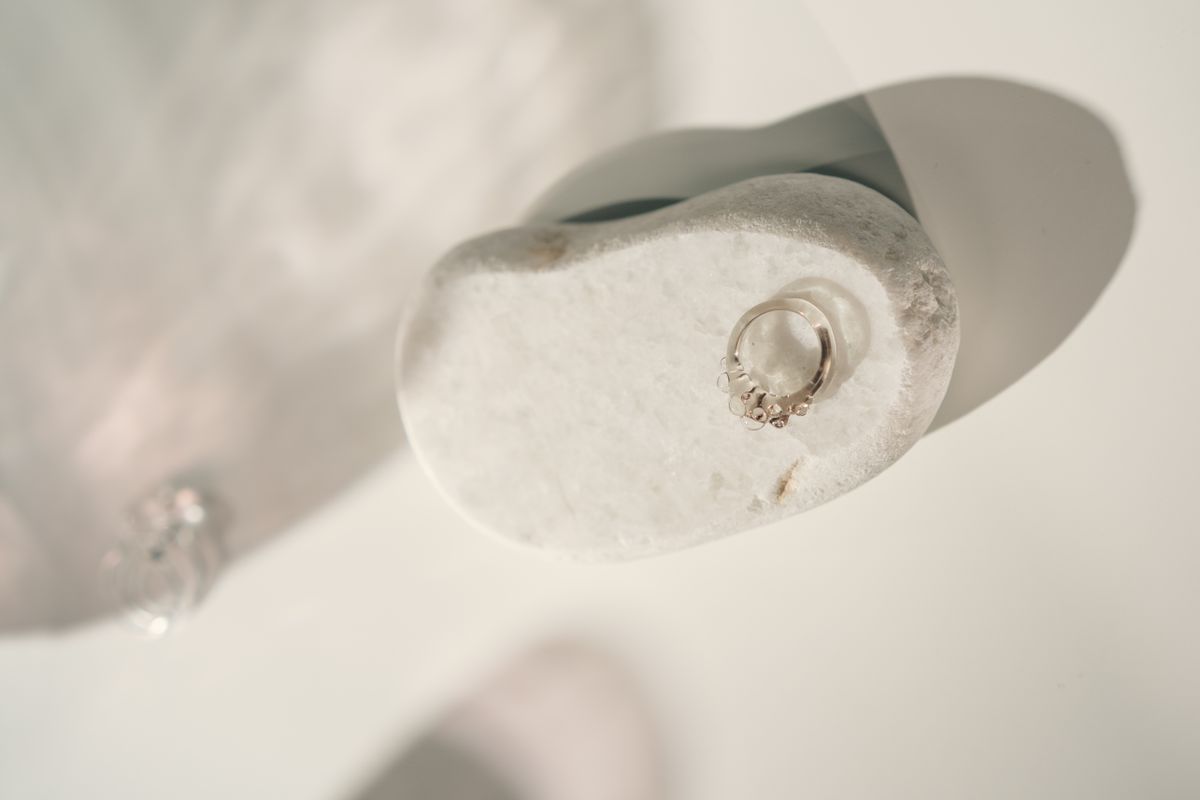
One method handles nearly every jewelry cleaning job: warm water, a drop of mild soap, a soft brush. The exceptions matter more than the method, because the wrong technique on the wrong stone causes damage that no cleaning can reverse. The dividing line is not expense but construction — hardness, porosity, treatments, and whether the piece is strung on thread.
For diamonds, most hard colored stones, and plain metal settings, the Gemological Institute of America (GIA) recommends warm soapy water and gentle brushing with a soft brush, dried with a lint-free cloth. A practical version: a drop or two of mild dish soap in warm water, a soak of roughly 20 minutes, a gentle scrub behind the stone where skin oil and lotion film collects, then a rinse under warm running water — with the drain closed first, so a loose stone does not disappear. This baseline restores most dull diamonds, whose cloudiness is almost always surface film rather than damage. GIA notes that home ultrasonic cleaners may loosen stones even on diamond jewelry, so they are not a default step.
Ultrasonic cleaners shake debris loose with high-frequency vibration, and that same vibration destroys anything fragile, porous, or filled. Pearls top the list: GIA advises they should never be cleaned with ultrasonic or steam cleaners, and their nacre is soft enough — about 2.5 on the Mohs scale — to scratch and abrade easily. Opals share the prohibition because they are hydrated silica, holding water inside the stone itself; heat and vibration can dry or shock them into crazing, a fine network of permanent surface cracks. Emeralds frequently carry fracture fillings that heat, chemicals, steam, and ultrasound can damage, which is why GIA advises buyers to ask about fillings before any deep cleaning. The same caution extends to tanzanite, turquoise, lapis lazuli, and amber — porous or fragile stones that want a damp cloth, never a bath.
Pearls fail from soaking for a reason that has nothing to do with the pearl itself: strung pieces are held together by silk, and silk absorbs water like cotton. A soaked strand swells, then dries unevenly, which stretches the thread and leaves pearls loose or crooked. The routine that GIA-endorsed care guides describe is simpler: wipe each pearl with a barely damp soft cloth after wearing, and let strung pieces dry completely before wearing or storing. An occasional wash in warm soapy water is acceptable for a deeper clean, provided the strand dries fully afterward. Strung pearl necklaces should be professionally restrung roughly every one to two years of regular wear. Perfume, hairspray, and lotion dull or pit nacre on contact, so pearls go on after the beauty routine, not before.
Sterling silver does not need cleaning so much as deoxidizing. Silver reacts with sulfur in the air and forms silver sulfide — the dark layer familiar as tarnish — and humidity speeds the process dramatically. A dedicated silver polishing cloth removes it with a few passes; dipping tarnished silver in a baking-soda solution works faster but is a technique better reserved for plain pieces, since anything with stones, glue, or intentional oxidized details can suffer. Storage matters as much as polishing: a closed pouch away from humid bathrooms stretches the time between cleanings from weeks to months.
Toothpaste, baking soda paste, and other abrasive home remedies scratch polished surfaces; chlorine bleach can pit gold alloys, which is why fine jewelry comes off before swimming pools and hot tubs. Alcohol and hydrogen peroxide are unnecessary for routine care and can damage adhesives, treated stones, and plated finishes. And when a piece mixes materials — a gemstone on a plated chain, enamel on silver — the rule from the GIA’s care guidance is to treat it according to its most vulnerable part. If you cannot identify a stone or its treatment, warm water and a cloth is the only method that cannot make things worse. More on which metals tolerate which treatment sits in sterling silver vs stainless steel and solid gold, vermeil and plated terms explained.
No. The Gemological Institute of America (GIA) advises that pearls should never be cleaned with ultrasonic or steam cleaners. Ultrasonic vibration can separate the layered nacre structure, and soaking a strung piece swells the silk thread, leaving pearls loose or crooked once it dries.
GIA identifies warm soapy water as the only safe cleaning method for opal. The stone is hydrated silica, holding water within its structure, so heat, steam, and sudden temperature swings can dry it out or crack it — a permanent defect called crazing.
No. Toothpaste contains mild abrasives designed for enamel, and those abrasives scratch polished metal and soft gems alike. Warm water with a small amount of mild dish soap and a soft brush achieves the same result without the damage.
Elena Brooks · Updated September 19, 2026
Elena Brooks · Updated September 19, 2026
Elena Brooks · Updated September 19, 2026