Jewelry
The One Stud-Earring Spec That Matters: Post Metal
The stud earrings that survive daily wear share one spec — a sterling silver or solid gold post. Why post metal matters more than stone size or sparkle.
Clothing, shoes & accessories, honestly reviewed
Jewelry
The stud earrings that survive daily wear share one spec — a sterling silver or solid gold post. Why post metal matters more than stone size or sparkle.
By Elena Brooks · Accessories & Jewelry Editor
Last updated September 8, 2026
Some links below are affiliate links — if you buy through them, we may earn a commission at no additional cost to you.
Top Pick
4.9/5Solid 14k gold post with lab-grown diamonds in a low bezel — no plating in the piercing canal to ever wear out.
~$478 suggested
Budget Pick
4.4/5Sterling silver post under the plating and screw-backs that stay put — the sleep-in daily pair.
~$14 suggested
Second-Hole Pick
4.7/5Tarnish-free and hypoallergenic with a 2-year warranty; a criss-cross style that reads pricier than it is.
~$75 suggested
The stud earring market sells carat weight and sparkle, but daily wear punishes a different spec entirely: what the post is made of. The post sits inside a piercing canal for hours at a time, so a nickel-bearing alloy behind a pretty stone causes more irritation than any diamond size ever solves. Owner reviews of the most-repurchased studs rarely mention brilliance. They mention never taking them out, sleeping in them, and ears that stay calm. That is a metal story, and it is the only part of the purchase worth paying a premium for.
Three specs sort the field. First, the post: solid 14k gold, sterling silver, or implant-grade steel are the low-reactivity choices; plated brass posts are the ones that turn lobes itchy once the plating wears. Second, the back: flat screw-backs and locking discs stay put through hair brushing and pillow friction, while standard push-backs are the most commonly lost part. Third, the setting: low-profile bezels catch less than tall prong baskets, which matters for anyone who sleeps in their studs or wears them under headphones and masks.
Notice what is missing from that list. Stone size, stone type and brand name affect how the studs photograph and almost nothing about how they wear. A 2mm cubic zirconia on a solid gold post outlasts and outwears a half-carat stone on plated brass in every way that registers after the first month. The market prices sparkle; ears reward metal.
Implant-grade steel and titanium deserve a mention as the sleeper options. Both are the metals actual piercers place in fresh piercings, precisely because they provoke almost nothing even in irritated tissue, and both sell for less than solid gold. Their limits are practical rather than chemical: fewer jewelry-grade styles are made in them, and steel posts can nickel-bleed at low levels in the small share of wearers with acute sensitivity. For healed, calm piercings the picks below cover the style range better; for an ear that flares at everything, the piercing-studio case is the one to shop.
Plating is a coating measured in microns, and a piercing post lives in the one environment designed to strip coatings: warm, moist, slightly salty, constantly in motion. Shower products, sweat and skin chemistry work on the plating every day, and once it wears through, the base metal underneath touches the canal directly. Nickel is the usual offender in cheap alloys, and nickel sensitivity is common enough that a supposedly fine pair of studs can start itching a year in with no change in care habits.
Sterling silver and solid gold behave differently because there is nothing underneath to expose. Sterling is 92.5 percent silver with copper as the balance; it may patina but it will not plate off. Solid 14k gold is 14 parts gold in 24 and effectively permanent as a wear surface. This is why the cheap pair in this guide is not cheap where it counts — the PAVOI below puts a sterling silver post under its plating, spending the budget on the surface that actually touches skin.
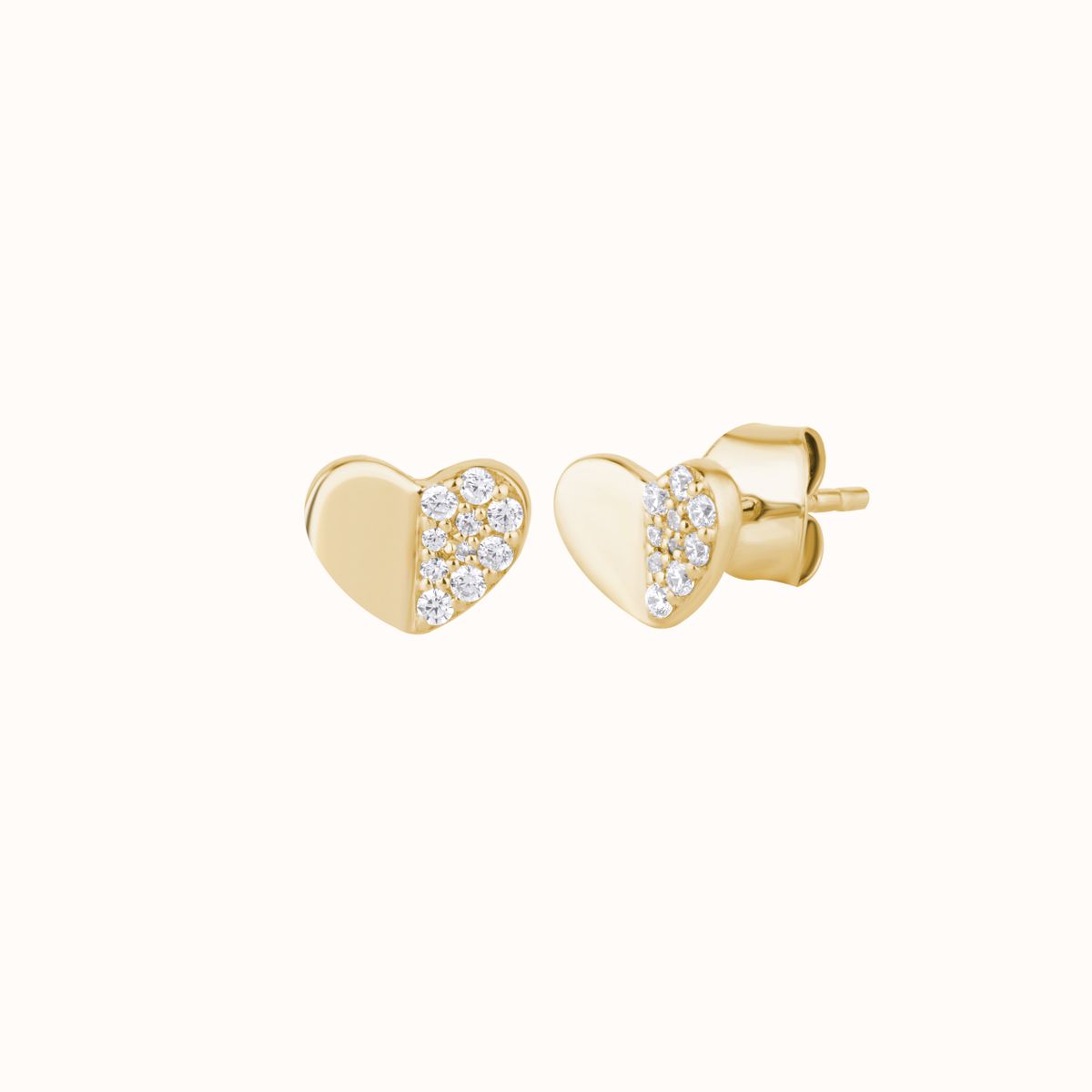
Mejuri Mini Bezel Round Lab Grown Diamond Studs. The buy-it-once answer. Solid 14k gold with lab-grown diamonds in a low bezel, rated 4.9 on Mejuri’s own product page, at $478. Mejuri markets the 14k as waterproof and made to live in, and the bezel profile sits flush enough for ear stacks and headphones. The post is solid gold, which means there is no plating in the canal to wear out — ever. The lab grown stones keep the price below what mined equivalents would demand, and the low bezel is the profile that survives sleep.
PAVOI 14K Gold Plated CZ Flat Back Studs. The budget pick with the right engineering: a solid 925 sterling silver post under the 14k plating, so even heavy wear leaves skin-safe metal against the piercing. The flat screw-back design earns a 4.4-star rating across 2,615 Amazon reviews, with owners highlighting comfort while sleeping and no green ears. The recurring complaint is fiddly screwing — a fair trade for backs that never slip off. At $14, it is also the cheapest way to learn whether flat-backs suit your ears before committing to solid gold.
Ana Luisa Sloane Gold Stud Earrings. A criss-cross gold stud at ~$75, rated 4.7 from 66 reviews on analuisa.com. Ana Luisa pieces are built as tarnish-free, water-resistant and hypoallergenic, with a 2-year warranty behind the claim, and owners describe wearing them nonstop. A good mid-price option for a second or third piercing, where you may not want to spend Mejuri money on a hole that is still deciding whether it earns a permanent resident.
| Studs | Post metal | Rating source | Best for |
|---|---|---|---|
| Mejuri Mini Bezel Diamond | Solid 14k gold | 4.9 (mejuri.com product page) | The forever pair |
| PAVOI CZ Flat Back | Sterling silver post | 4.4 (2,615 Amazon ratings) | Sleep-in budget studs |
| Ana Luisa Sloane | Plated, warrantied | 4.7 (66 site reviews) | Second and third holes |
Read the table as a price ladder on one variable. The Mejuri buys a post that cannot degrade, at the highest price in the group. The PAVOI buys the same skin-safe surface with a sacrificial outer layer above it, at $14 — plating that will eventually dull everywhere except where it matters, inside the canal. The Ana Luisa sits between with a warranty standing behind its finish. None of the three asks you to accept a plated post against skin, and that is the floor for any daily stud: everything above the post is taste, and everything below it is chemistry.
The back is the part you lose, so it deserves more attention than it gets. Standard push-backs are tiny friction tubes; they slide on fast, and they slide off almost as fast under pillow friction, hair brushes and the collar of a sweater. Most people who “lost” a stud lost the back first and the stone somewhere after. Screw-backs thread onto a threaded or notched post and cannot shake loose, which is why both the PAVOI and the Mejuri lean on them. The cost is time: they take a few seconds more to put on, and the threading is fiddly for anyone with stiff fingers or long nails.
Flat-back designs add a comfort dimension worth knowing about. A flat disc sits against the lobe without the pointed stem that makes sleeping on push-back studs unpleasant, and it lies flat enough to slide under a phone headset. Locking discs occupy the middle ground: they push on but grip, and they suit anyone who wants security without threading. Whatever the mechanism, check it early — a loose back discovered at home is a warranty conversation, while one discovered on the street is a lost earring.
The daily-wear dream is a stud you forget about, and forgetting is a profile problem. A tall prong basket catches on pillowcases, headphone cushions, mask straps and scarves; each catch tugs the piercing canal and slowly irritates it. A low bezel presents almost no edge, which is why the Mejuri’s bezel setting matters beyond looks, and why flat-back studs have a devoted following among people who never remove their earrings.
If you do sleep in studs, two habits reduce the wear on both ear and earring. Re-tighten screw-backs weekly, because threading works loose millimeter by millimeter over months. And give new piercings or newly changed studs a night or two without them before committing to round-the-clock wear, so any reaction shows up when you can still return the pair.
Daily-wear failure has a recognizable timeline. The first sign of a wearing-out plated post is color: the gold tone dulls or shifts toward the base metal at the post and backing, the places friction polishes first. Next comes feel — a faint itch at the end of the day that showers do not fix. By the time the lobe looks red or flaky, the plating has been gone from the canal surface for a while. Solid gold and sterling posts fail differently or not at all: 14k may dull and need a polish, sterling may darken with tarnish, and both are surface conditions that cleaning reverses.
Cleaning daily studs takes minutes a month. Warm water, a drop of dish soap, a soft toothbrush behind the stone and around the post, then a thorough rinse and a fully dry before storing — the method in our guide to cleaning jewelry safely covers it. Dryness matters more than polish for backs, since trapped moisture is what accelerates tarnish on sterling and dulls everything else.
Storage shapes the timeline too. Studs tossed loose into a dish or pouch scratch each other’s finishes and bend posts; a compartment box with slots keeps posts straight and backs paired, and a pair that never bends never works loose at the threading. Keep the box away from the bathroom counter, where steam from daily showers supplies the moisture that dulls finishes overnight.
Spend on the post, economize on the stone. A solid gold post with a small stone outlasts a large CZ on a plated brass post in every way that shows after month three. If you want to test a size or style before committing, buy the budget pair first — the PAVOI at $14 is a cheap prototype for whether flat-backs suit your ears. Step up to the Mejuri when the daily pair has proved itself, and keep the Ana Luisa Sloane in mind for extra holes where a warrantied, hypoallergenic mid-price stud does the job.
The same post-metal logic runs through every category you never take off. If hoops are your other daily staple, it is the spine of Best gold hoop earrings; for the necklace side of a never-take-it-off rotation, see Best necklaces that don’t tarnish. And when a sterling post darkens, that is tarnish, not damage — the difference between sterling and stainless steel is laid out in our comparison.
| Studs | Post metal | Rating source | Best for |
|---|---|---|---|
| Mejuri Mini Bezel Diamond | Solid 14k gold | 4.9 (mejuri.com product page) | The forever pair |
| PAVOI CZ Flat Back | Sterling silver post | 4.4 (2,615 Amazon ratings) | Sleep-in budget studs |
| Ana Luisa Sloane | Plated, warrantied | 4.7 (66 site reviews) | Second and third holes |
Everything on this page comes back to one question: what does the label tell you, and what does the thing do on month three? Start at the care companion to build a washing and storage routine that fits what you actually own.
The ASTM D5489 symbol system, decoded operation by operation.
Cool-water washing, de-pilling without damage, moth-proof storage.
What feeds the aging curve and what breaks it.
Elena Brooks · Updated October 1, 2026
Elena Brooks · Updated September 19, 2026
Elena Brooks · Updated September 19, 2026
Elena Brooks · Updated September 19, 2026