Footwear
White Sneakers That Actually Clean Up: Leather, Sole and Fit
How the most popular white leather sneakers for women compare on cleanability, fit and sole construction — from Stan Smith to Veja Esplar.
Clothing, shoes & accessories, honestly reviewed
Footwear
How the most popular white leather sneakers for women compare on cleanability, fit and sole construction — from Stan Smith to Veja Esplar.
By Priya Nair · Footwear Editor
Last updated August 30, 2026
Some links below are affiliate links — if you buy through them, we may earn a commission at no additional cost to you.
Top Pick
4.6/5Smooth leather that wipes clean, in production since 1971; 4.6/5 across 12,400+ Amazon ratings.
~$100 suggested
Upgrade Pick
4.8/5Wild-rubber sole and recycled lining; InStyle's tester logged 15,000 blister-free steps and rated it 4.8/5.
$155 suggested
Budget Pick
4.2/5Garment leather over a high-abrasion rubber outsole; 4.2/5 from 63 reviews on Reebok.com.
~$85 suggested
Most white sneakers are bought on looks and retired on stains. The pairs that survive a full year share one boring material decision: smooth leather over a sealed sole. Canvas drinks grime, knit holds onto it, and suede never forgives. That single difference explains why every long-running white sneaker recommendation — the Stan Smith has been in production since 1971 — is a leather court shoe. The three below are the models owner reviews and style editors keep circling back to, and each earns its place on cleanability, not hype.
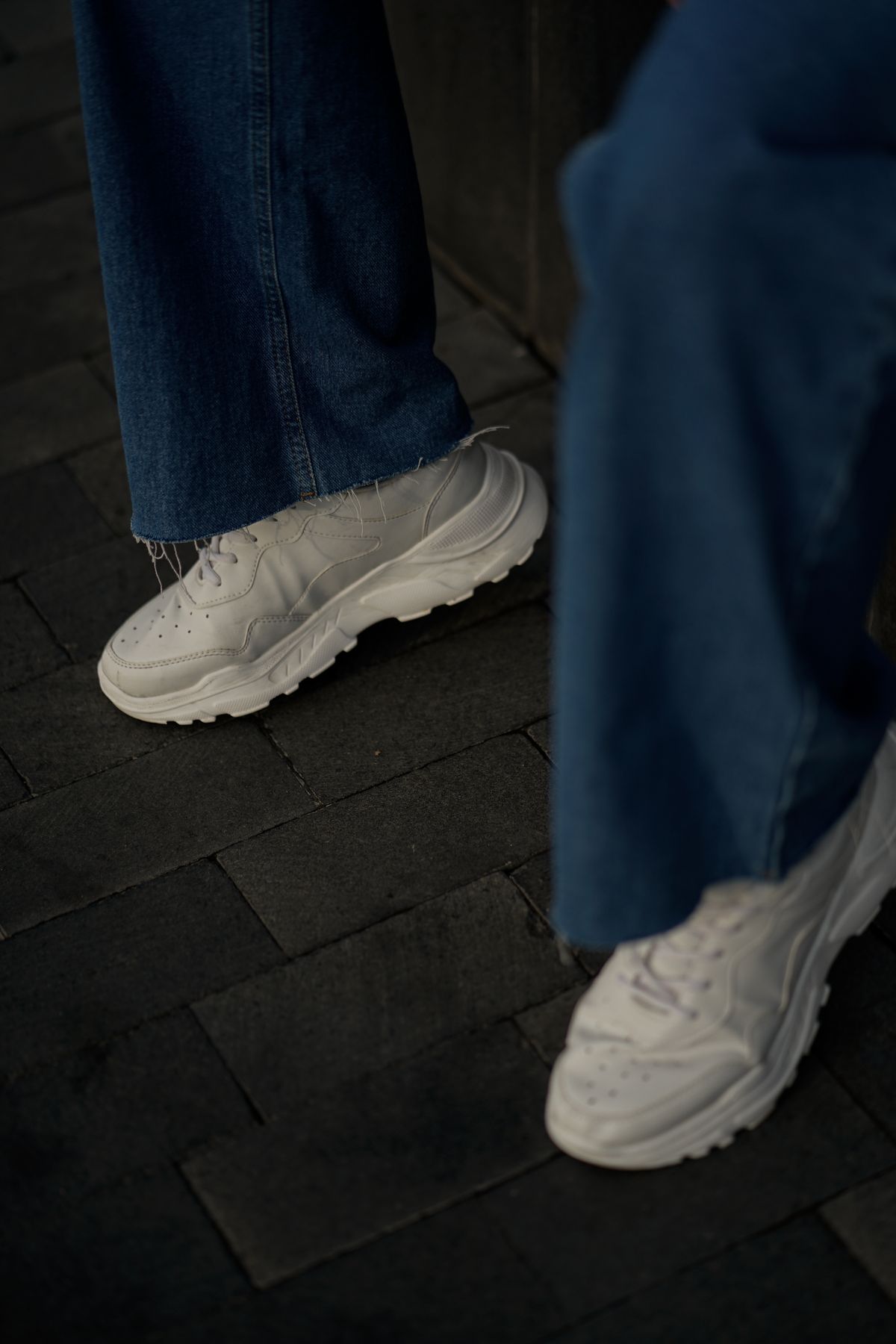
A white sneaker’s fate is settled by its materials, not by how carefully you walk. The first surface is the upper. Smooth or lightly grained leather resists staining and wipes clean; suede and nubuck look great and stain permanently, because their nap traps dirt below the level a cloth can reach. This is why nearly every recommendation list converges on leather court shoes.
The second surface is the sole edge. A sealed or vulcanized sole keeps its color and shrugs off scuffs. Raw foam midsoles behave differently: they yellow as they oxidize, they drink scuffs, and no amount of wiping restores them. The Stan Smith and the Club C 85 both use vulcanized rubber construction for exactly this reason.
The third surface is the crease. Leather creases where the toe bends, and a creased toe box reads as dirty even when it is spotless — dirt settles into the fold lines and stays. Half sizes matter here more than in any other shoe category. A sloppy fit that lets the foot slide forward creases the toe box at the wrong point every single step, and that damage is permanent.
None of these three surfaces can be upgraded after purchase. A protective spray adds a little stain resistance, but no aftercare turns suede into smooth leather or a raw foam midsole into a sealed one. The inspection happens in the store or on the product page, which is why the spec below leads with upper and sole rather than with color or collar branding.
Adidas Stan Smith. In production since 1971, the Stan Smith is the default white sneaker for a reason: the smooth leather upper takes a wipe and keeps its shape for years. Owner reviews on Amazon average 4.6 out of 5 across more than 12,400 ratings, and the recurring praise is exactly the cleanability argument — scuffs lift with a damp cloth and mild soap. The trade-offs are flat cushioning and minimal arch support, so it is a style and errands shoe, not a mileage shoe. That flatness is not a defect; it is the construction that keeps the silhouette crisp and the toe box supported enough to resist deep creasing.
Veja Esplar. The Esplar is Veja’s earliest low-top, named for the Brazilian organic-cotton cooperative behind its supply chain, with a sole built on wild Amazonian rubber and a lining made from recycled plastic bottles. InStyle’s tester rated it 4.8 out of 5 and logged 15,000 blister-free steps on the first day, noting it felt comfortable right out of the box.
Other owner reports describe a firmer, break-in-heavy feel, and sizing feedback splits between snug forefoot and heel slip — order from a retailer with easy returns and try both half sizes. The premium buys the material story: wild rubber and recycled lining are real construction choices, not packaging.
Reebok Club C 85. Originally a 1985 tennis shoe, the Club C 85 pairs a soft garment-leather upper with a high-abrasion rubber outsole, which is the material recipe for a sneaker that scrubs up well and wears slowly. On Reebok’s own site it averages 4.2 out of 5 from 63 reviews, with buyers reporting a true-to-size fit and a cushioned EVA midsole that makes it more comfortable than its flat profile suggests. At around $85 it is the entry point of this group, and the smaller review count means the sample is thinner — but the reports that exist skew toward exactly the fit consistency the Stan Smith owners also describe.
The method is boring and it works. Start with a dry cloth to lift loose dirt, because rubbing wet grit across leather grinds it into the grain. Then a damp cloth with a drop of mild soap handles most scuffs; work in small circles and wipe off the soap residue with a second damp cloth. Let the shoe air-dry away from a radiator or sunny windowsill, since rapid heat dries the leather finish and invites cracking.
Skip the aggressive tools. Melamine sponges and solvent cleaners can dull or strip a finish that a damp cloth would have cleaned safely, and once the finish is compromised, the leather stains faster than before. If a mark will not lift, leave it — a small scuff reads better than a worn patch. A leather conditioner applied occasionally keeps the upper from drying out, and a protectant spray before first wear buys a margin against the worst spills.
The sole edge responds to the same logic. Scuffs on vulcanized rubber wipe off with soapy water; left alone, they gray the edge and make a clean upper look neglected.
Set a rhythm instead of reacting to damage. A thirty-second wipe-down after a dirty day does more than a monthly deep clean, because the dirt that lifts easiest is the dirt that has not dried into the grain. Deep cleaning stays reserved for real spills; daily maintenance is cloth, water, done.
The cheapest cleaning is the one you never do. A protectant spray on a fresh pair buys a margin against the spills that would otherwise set — spray outside, in thin coats, and let it dry fully before first wear. Reapply every month or two of regular use, since the coating wears with the leather.
Blot immediately, whatever happens. Coffee, mud and sidewalk salt all bind harder as they dry; a damp cloth within the hour handles most accidents before they become stains. Salt lines from winter sidewalks are the worst of the three, and they lift best while still damp.
Storage matters more than most owners expect. Leather left in direct sunlight lightens and dries, and rubber left in it yellows, so a pair parked by a window ages twice as fast as one in a closet. Keep the sneakers dry between wears — after a wet day, stuff them loosely with paper and let them air out away from heat. And rotate if you wear white sneakers daily: a pair that never dries out fully wears its lining and sole adhesive faster than the upper ever would.
Court shoes are cut firm. Garment and smooth leather uppers stretch gradually over weeks of wear, so a snug first fit often relaxes to right, while a loose first fit only gets looser. The feedback on the Esplar captures both failure modes — some owners report a snug forefoot, others heel slip — which is why trying both half sizes from an easy-returns retailer is the only reliable strategy there.
Check the crease line during the first wears. It should sit where your toes bend, not lower across the toe box, and it should be shallow. A deep crease forming in week one means the shoe is too big or the foot is sliding forward, and no later adjustment fixes leather that has already folded. Lacing snugly through the first week helps the upper mold to the foot before the creases set.
| Sneaker | Upper | Sole | Rating | Best for |
|---|---|---|---|---|
| Adidas Stan Smith | Smooth leather | Vulcanized rubber | 4.6 (Amazon) | The clean-first default |
| Veja Esplar | Leather | Wild rubber, recycled lining | 4.8 (InStyle tester) | Sustainability-focused buyers |
| Reebok Club C 85 | Garment leather | High-abrasion rubber | 4.2 (Reebok.com) | Budget everyday wear |
The first seven days decide how the next year goes, so use them. Wear the sneakers for short outings first and check two things each time: whether any spot rubs red, and whether the heel slips on uphill steps. Leather softens with wear, but a pressure point that shows up early tends to persist, and a return claim is far easier to make inside the first week.
Expect the Esplar’s firmer feel to soften over its break-in period — the first-day comfort in InStyle’s test is the exception, not the owner consensus. The Stan Smith and Club C 85 need less patience; both are built on constructions that have been worn in by decades of buyers. Give any pair three or four wears before judging the fit for good, and keep the box until the crease line and heel hold have proven themselves.
One seasonal caveat belongs here. Salt is the enemy no cleaning routine fully beats — it bleaches leather white along the seams and returns even after careful wiping. On slushy winter days it is worth reaching for a different pair entirely and saving the white leather for dry pavement.
Buy the Stan Smith if you want the lowest-maintenance pair; it is the easiest white sneaker to keep clean, and 12,400-plus ratings leave little sample doubt. The Esplar earns its premium if the materials story matters to you, with the caveat that fit runs inconsistent. The Club C 85 delivers the same leather-cleans-up logic for less.
Court shoes have limits, and it is worth naming them. Flat profiles and minimal arch support are wrong for all-day walking, whatever the color. If your days are more steps than errands, add a dedicated walker from our best walking shoes for women guide; if court shoes pinch your forefoot, the wide-feet flat picks in best flats for wide feet are the fallback.
| Sneaker | Upper | Sole | Rating | Best for |
|---|---|---|---|---|
| Adidas Stan Smith | Smooth leather | Vulcanized rubber | 4.6 (Amazon) | The clean-first default |
| Veja Esplar | Leather | Wild rubber, recycled lining | 4.8 (InStyle tester) | Sustainability-focused buyers |
| Reebok Club C 85 | Garment leather | High-abrasion rubber | 4.2 (Reebok.com) | Budget everyday wear |
Everything on this page comes back to one question: what does the label tell you, and what does the thing do on month three? Start at the care companion to build a washing and storage routine that fits what you actually own.
The ASTM D5489 symbol system, decoded operation by operation.
Cool-water washing, de-pilling without damage, moth-proof storage.
What feeds the aging curve and what breaks it.
Priya Nair · Updated October 1, 2026
Priya Nair · Updated September 19, 2026
Priya Nair · Updated September 19, 2026
Priya Nair · Updated September 12, 2026