Guides
The Capsule Wardrobe Checklist: 27 Pieces That Cover a Full Season
A practical capsule wardrobe checklist for women — 27 core pieces built around fabric quality and fit, not trends, with guidance on where to spend and where to save.
Clothing, shoes & accessories, honestly reviewed
Guides
A practical capsule wardrobe checklist for women — 27 core pieces built around fabric quality and fit, not trends, with guidance on where to spend and where to save.
By Claire Whitmore · Fashion Editor
Last updated September 19, 2026
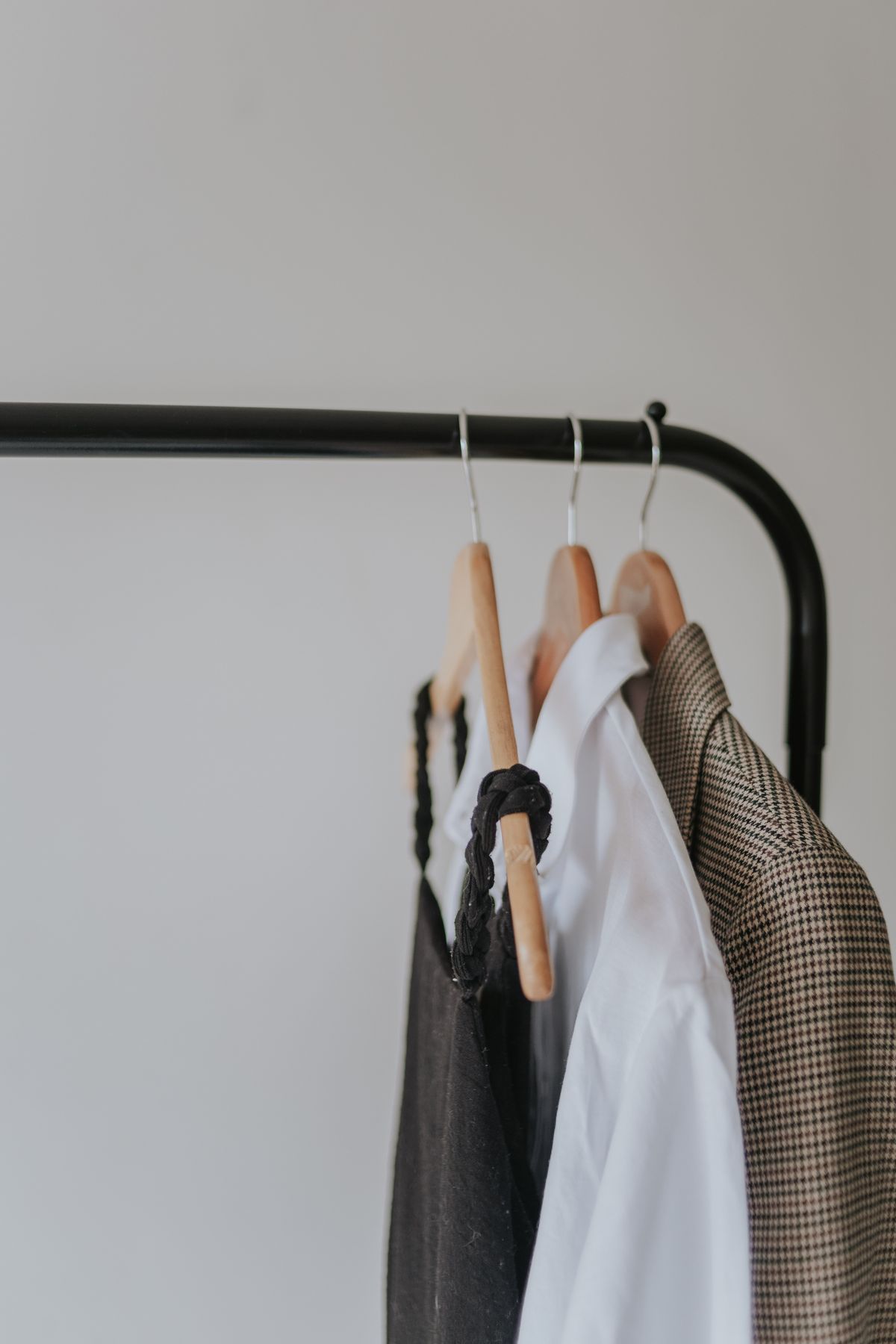
The capsule wardrobe idea gets dressed up in a lot of aesthetic talk, but at its core it is a laundering-and-logistics system: a bounded set of pieces where everything interlocks, so getting dressed stops being a daily decision problem. Most capsule attempts fail not for lack of willpower but because they were bought for the fantasy version of your week. This checklist is built to survive contact with an actual calendar, and it prioritizes fabric and construction over brand, because a capsule full of pilling acrylic is just a small, sad closet.
Three constraints keep a capsule honest. Every new piece must pair with at least three things you already own; if it pairs with one outfit only, it is an outfit, not a capsule piece. Fit beats everything, because a $400 coat that gaps at the shoulder loses to a $120 one that sits right. And spend where friction is highest — the five shoes and the winter coat take more daily abuse than everything else on the list combined.
Tops (8). Two quality white t-shirts, one black t-shirt, two merino or cotton knit sweaters in neutral tones, one oversized button-down shirt, one fitted shirt for tucking, one lightweight layering turtleneck.
Bottoms (5). One straight or straight-wide jean in a dark wash, one lighter jean for warm months, one tailored trouser, one wide-leg or palazzo pant in a fluid fabric, one midi skirt with a lined waistband.
Layers (4). One unstructured blazer, one chore jacket or casual jacket, one true winter coat, one cardigan heavy enough to function as a top layer.
Dresses & one-pieces (2). One day dress in a non-cling fabric, one occasion dress you would not mind being photographed in.
Shoes (5). White leather sneakers, black ankle boots, one flat or loafer with real arch support, one heel you can walk three blocks in, one weather-appropriate boot or sandal for your climate.
Bags & accessories (3). One everyday bag that fits a laptop or your actual daily load, one small crossbody, one scarf in wool or cashmere blend.
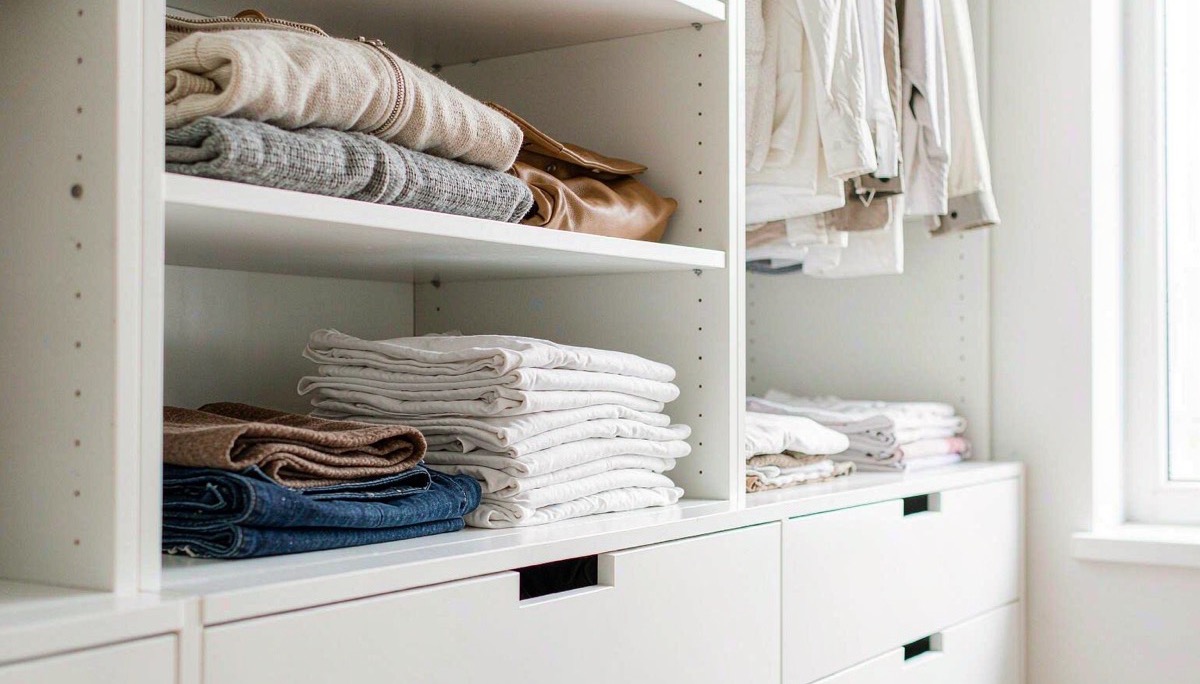
The whole capsule lives on three shelves — folded by category, nothing doubled up.
Spend on the five shoes and the coat — construction differences are physical, not cosmetic, and these pieces take the most daily abuse. The merino knits are worth upgrading too if you hate pilling. Save on t-shirts, which live on a 1–2 year replacement cycle anyway, and on the occasion dress, which gets worn rarely and photographs fine at any price point if the fit is right.
A 27-piece capsule sized for one season gives you eight tops, which means the wash cycle comes around roughly every eight days. That number should shape what you buy. White tees and denim sit on a one-to-three-year replacement cycle depending on wash habits, so the honest version of this checklist includes a small annual budget for the pieces that wear out first, not a one-time shopping trip.
Undersizing the top half is the expensive mistake. A capsule with four tops forces a mid-week laundry sprint, and laundry sprinted in hot water and the dryer is what actually kills fabric — the wear you cause in the wash room outruns the wear you cause at the desk. Buying the eighth top up front is cheaper than replacing four stressed-out ones a year early.
The list asks for merino or cotton knits instead of acrylic for a reason that shows up on wash day: acrylic pills at the friction points and stretches out permanently, while a merino knit resists odor strongly enough to go several wears between washes, which slows its own wear cycle in turn. The same logic runs through every slot. Dark-wash denim in a heavier weight outlasts the stretch blends; a midi skirt with a lined waistband holds its shape where an unlined one bags at the hip; the fluid wide-leg pant wants a fabric whose drape survives washing, not one that only drapes on the hanger.
The full fiber-by-fiber version of these rules is in our fabric guide, and the care half of the equation — washing less, washing cold, drying knits flat — matters as much as the buying half. A capsule assembled this way compounds instead of depreciating.
Most dead capsules die in one of three ways. The first is buying for the fantasy week: the occasion-dress quota assumes events that happen twice a year while the Tuesday slot, the one you actually live in, is left thin. The second is undersizing — below roughly 20 pieces, laundry logistics start dictating outfits, and a system that dictates gets abandoned within a month. The third is the opposite: past about 50 pieces you have a closet again, and a closet reproduces the exact decision problem the capsule was built to solve.
There is a quieter fourth failure: the climate-mismatch shoe. The weather-appropriate slot assumes a climate you actually have, not the one you wished for in July, and one wrong shoe throws the footwear count off for the whole season. Check last year’s weather, not the brochure’s.
Do a dry run: lay out two weeks of outfits from the list without repeating an identical combination. If you cannot, the gap is usually one specific layering piece, not a shopping spree. Track what actually gets worn for a month — in most honest audits, a third of any closet does 90 percent of the work, and the capsule checklist is simply a way of choosing that third deliberately.
Once the capsule is live, keep the storage side of it equally honest. File-folded drawers keep the whole inventory visible at a glance, which is half the battle on the mornings the system is under load; the setup is in our drawer folding methods guide. A capsule that survives is never the prettiest one on paper — it is the one whose wash, wear, and storage logistics were designed for the week you actually have.
Most workable capsules land between 25 and 40 pieces including shoes, for a single season. Below about 20, laundry logistics start dictating your outfits; above 50, you have a closet, not a capsule. The number matters less than the rule that every piece pairs with at least three others.
Core knitwear, coats, and leather goods should last several years — replace them when construction fails, not when the color feels stale. High-friction items like white tees and denim wear out on a 1–3 year cycle depending on wash habits, and budgeting for that honestly is part of the system.
Yes, with a ratio shift. A work-from-home capsule leans harder on quality knitwear, straight-cut jeans, and one presentable layer (a blazer or chore jacket) for meetings, and can drop the second pair of formal trousers most office capsules carry.
Everything on this page comes back to one question: what does the label tell you, and what does the thing do on month three? Start at the care companion to build a washing and storage routine that fits what you actually own.
The ASTM D5489 symbol system, decoded operation by operation.
Cool-water washing, de-pilling without damage, moth-proof storage.
What feeds the aging curve and what breaks it.
Claire Whitmore · Updated October 12, 2026
Claire Whitmore · Updated October 12, 2026
Claire Whitmore · Updated October 12, 2026
Claire Whitmore · Updated October 10, 2026