Apparel
Hanger Types Explained: What to Hang and What to Fold Instead
A practical guide to hanger types — wire, plastic, wooden, velvet, padded — and the shoulder-bump physics that decides which garments hang and which ones fold.
Clothing, shoes & accessories, honestly reviewed
Apparel
A practical guide to hanger types — wire, plastic, wooden, velvet, padded — and the shoulder-bump physics that decides which garments hang and which ones fold.
By Claire Whitmore · Fashion Editor
Last updated October 10, 2026
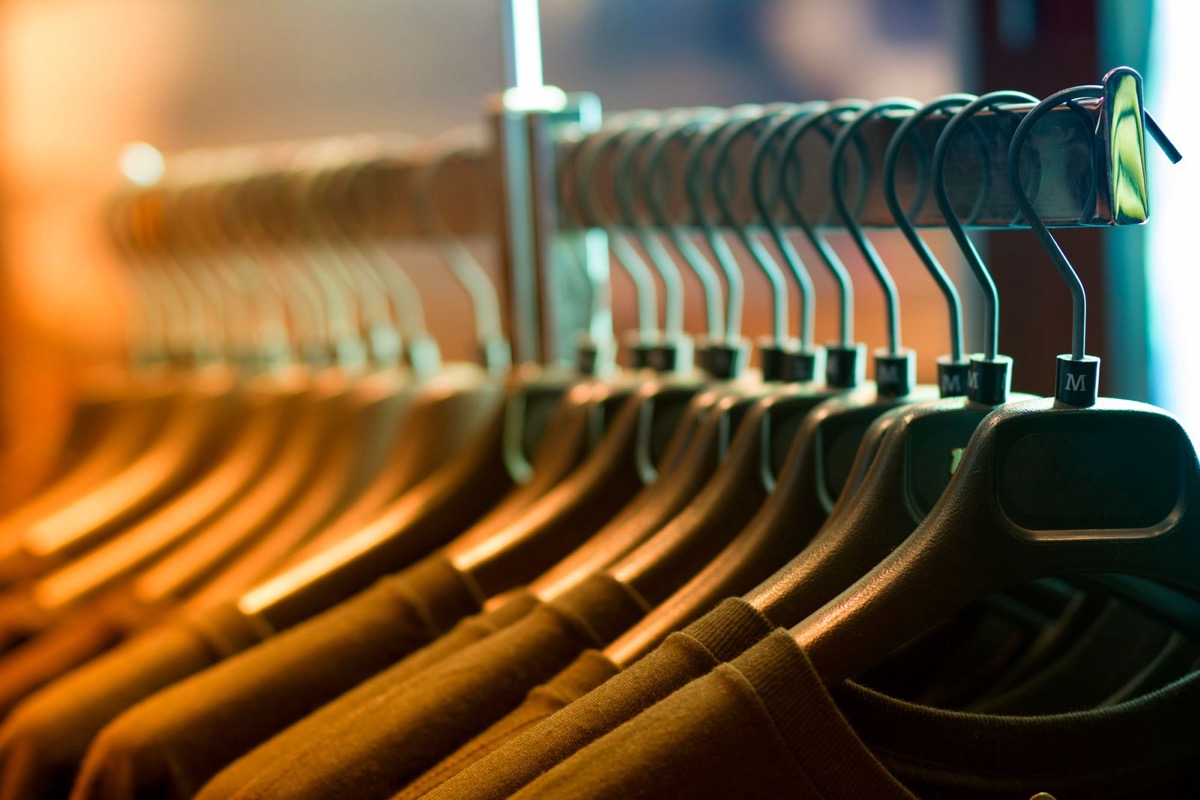
The free wire hanger from the dry cleaner and the twenty-eight-dollar maple one from a home goods store have more in common than either end of that price gap wants to admit: in the wrong garment, both will wreck a shoulder. And in the right garment, the wire hanger is — fine. That is the awkward truth. The hanger market sells you a hierarchy when what you actually need is a matching exercise, garment to hanger, like pairing shoes to a hemline. Get the pairing wrong and no amount of money fixes it. A hundred-dollar cashmere coat on a skinny wire hanger is being destroyed at the same rate as a ten-dollar tee.
The physics first, because it explains everything else. A hanger supports a garment at two points — the shoulders — and the fabric between them carries the weight in tension. Woven fabric does not care; it has almost no stretch and holds its shape for years. Knit fabric does care. Every week a heavy knit hangs, gravity works the yarn a little longer, and the weight concentrates right where the hanger edge presses — which is why the damage shows up as two symmetrical bumps, not a general sag. The bump is not a flaw in the sweater. It is a mismatch between the garment and its support.
Wire hangers. Free, thin, and covered in a vinyl or paper coating that eventually flakes onto clothing. Their narrow gauge concentrates all of a garment’s weight on a sliver of shoulder, which is exactly how bumps form. Fine for a shirt worn within the week, or for airing something briefly. Not fine for anything you love. If your dry cleaner returns coats on them, move the coat the same day.
Plastic tube hangers. The default hanger of most closets, and better than their reputation. A decent molded plastic hanger with a subtle curve handles blouses, tees, and dresses for years — the failure mode is the cheap flat version, where the shoulders are literally straight edges. Look for a gentle curve and, if you hang pants, a built-in bar. Beyond that, plastic is plastic; paying more buys color options, not performance.
Wooden hangers. The broad-shouldered choice, and the right one for anything with structure: blazers, coats, wool suiting, heavy jackets. The extra width spreads the weight across the whole shoulder seam, and the heft keeps garments from sliding into a pile at the back of the rod. They take up more rail space than anything else in this list — that is the real cost, not the price per unit. A closet that fits thirty wooden hangers fits forty-five plastic ones.
Velvet (flocked) hangers. Slim, grippy, and the reason nothing ends up on the closet floor. The flocked surface holds slippery silks and strapless dresses in place, and the thin profile doubles your rail capacity. The trade-off: shoulders run narrow, so heavy pieces still develop pressure points, and the coating on bargain versions can shed or catch on delicate weaves. Excellent workhorse for the everyday tier of a wardrobe; wrong for the coat tier.
Padded satin hangers. The one your grandmother reserved for beaded pieces, and she was right. For silk, embellishment, and anything with a delicate drape, the soft shoulder is the gentlest support made. They are bulky and clothes slide less than you would fear. Reserve them for the pieces that would show damage anywhere else.
There are also specialty shapes — clamp hangers for skirts, wide suit hangers, cascading hooks — and they solve real problems, but they are accessories to the five above, not a separate decision.
The rule is one line: structure hangs, knit folds.
Hang — woven shirts, blazers, coats, dresses, anything with a shoulder seam meant to sit on a shoulder, silk blouses, anything lined. The garment was cut to a shape, and a shaped hanger preserves it.
Fold — every sweater and cardigan, anything in jersey or ribbed knit, heavy cotton tees, cashmere, wool knits, and anything beaded or heavy at the neckline (beading adds weight that stretches a hanging knit double fast). If a garment has ever come off a hanger with dents at the shoulder, it has told you its preference. Believe it.
The label helps more than the fabric name does. The label reader approach applies here: the fiber content line tells you whether the yarn is knit or woven, and that decides the hanger question before aesthetics enter it. Cotton label says “100% cotton, knit” — folded. Says “viscose lining, wool shell” on a tailored coat — hung, on something wide.
First, match the width. A blazer on a hanger narrower than its shoulders creases mid-sleeve; a tee on a hanger ten inches wide stretches the neckline on the way in. Hold the garment up to the hanger for two seconds. That is the entire fitting process.
Second, empty the hangers you are not using. A rod crowded past its real capacity means garments press against each other, wrinkle, and get yanked out by the armful — which undoes everything the correct hanger was doing. If the closet is over capacity, the fix is the fold list above plus a shelf, not thinner hangers crammed tighter.
On day one, a well-matched hanger and a cheap mismatched one look identical. By month three, one shoulder is smooth and the other has two peaks. Cheap where it shows, not where it doesn’t — and the shoulder of a good coat is exactly where it shows. The hanger is not an accessory to the wardrobe. It is the wardrobe’s day job.
They are fine for most everyday pieces. The flocked coating grips slippery fabrics so nothing slides to the floor, but the slim shoulders on cheap versions can still leave small bumps on heavy knits. Use them for shirts, dresses, and blouses, and give coats and structured jackets something wider.
Match the hanger to the garment's shoulder — usually 16 to 17 inches for women's tailoring. If the hanger is narrower than the shoulder seam, the sleeve weight drapes over the edge and creases it; if it is too wide, it pushes into the sleeve and distorts the shoulder line.
Fold them. A hanging sweater carries its entire weight from two shoulder points, and gravity pulls the knit longer every week it stays up — the shoulder bumps are only the visible part. Fold knits and store them on a shelf or in a drawer, per our off-season storage guide.
Everything on this page comes back to one question: what does the label tell you, and what does the thing do on month three? Start at the care companion to build a washing and storage routine that fits what you actually own.
The ASTM D5489 symbol system, decoded operation by operation.
Cool-water washing, de-pilling without damage, moth-proof storage.
What feeds the aging curve and what breaks it.
Claire Whitmore · Updated October 9, 2026
Claire Whitmore · Updated October 9, 2026
Claire Whitmore · Updated October 1, 2026
Claire Whitmore · Updated September 29, 2026